
- Bộ sách Cánh Diều
- Bộ sách Chân Trời Sáng Tạo
Bộ sách Chân Trời Sáng Tạo
- Bộ sách Kết Nối Tri Thức Với Cuộc Sống
Bộ sách Kết Nối Tri Thức Với Cuộc Sống
- Bộ sách Tiếng Anh
- Bộ sách Xuất Bản Việt Nam
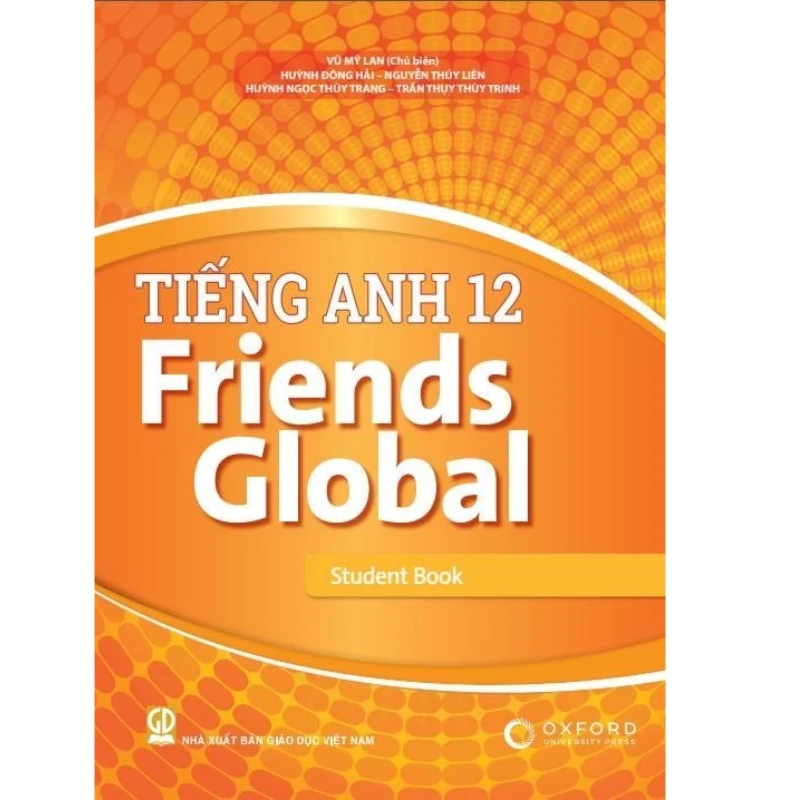
Mục lục
Unit I: Introduction
A. Vocabulary (p8): Friends, Verb patterns, Speaking: Talking about memorable events.
B. Grammar (p9): Present and future tenses, Present simple and present continuous, will and be going to, Pronunciation: Falling and rising intonation patterns.
C. Vocabulary (p10): Life events, Stages of life, Speaking: Describing life events.
D. Grammar (p11): Past tenses, Present perfect simple and present perfect continuous.
Unit 1: Relationships
A. Vocabulary (p12): Relating to people, admire, adore, etc., Verbal interaction, Recycle: The passive,  Teens talking about their family relations.
B. Grammar (p14): Negative structures, Negative adverbials, Negative questions, infinitives and -ing forms, Use of English.
C. Listening (p15): Sibling rivalry, Strategy: Features of fast speech, Pronunciation: Features of fast speech, Talking about sibling rivalry.
D. Grammar (p16): Articles and quantifiers, Use of English.
E. Word Skills (p17): Phrasal verbs, Dictionary work.
F. Reading (p18): Power of connection, Strategy: Dealing with unknown words when doing a multiple choice task, Vocabulary: Connections, Speaking: The most important qualities in another person.
G. Speaking (p20): Photo description and comparison, Strategy: Speculating and deducing, Key phrases: Speculating and deducing, Grammar: might / must / can’t have, Photo comparisons.
H. Writing (p21): An opinion essay, Strategy: Making your writing more interesting, Grammar: Structures and features to use in essays.
Review Unit 1 (p23)
• Reading: Multiple matching
• Listening: True / False
• Speaking: Photo-based discussion
• Writing: An opinion essay
Unit 2: Problems
A. Vocabulary (p24): It drives me crazy!, Describing feelings, Idioms to describe feelings, Speaking: Talking about feelings, using idioms, Recycle: Present continuous, What things affect feelings.
B. Grammar (p26): Comparison, Comparative structures, Qualifying comparatives (almost, not quite, nowhere near as… as, etc.), Use of English, Speaking: Agreeing and disagreeing with statements.
C. Listening (p27): Keep calm!, Strategy: Sentence stress, Speaking: Are you good in a crisis?, Teens talking about a difficult situation.
D. Grammar (p28): Infinitives and -ing forms, Infinitives without to (I’d rather, I’d sooner, etc.).
E. Word Skills (p29): Preposition + noun phrases, Dictionary work.
F. Reading (p30): Breaking with problems, Strategy: Matching texts to questions, Vocabulary: Crime collocations, Speaking: Debating security cameras.
G. Speaking (p32): Role-play, Strategy: Listening with interest; Using question tags, Key phrases: Being diplomatic, Pronunciation: Sentence stress; Question tag intonation, Negotiating cleaning duties in a flat share.
H. Writing (p33): A for and against essay, Strategy: Structuring an essay, Key phrases: Introducing different sides of the argument, Grammar: even though / even if.
Review Unit 2 (p35)
• Reading: Multiple matching
• Listening: Short text multiple choice
• Speaking: Negotiating rules in a flat share
• Writing: A for and against essay
Unit 3: Customs and culture
A. Vocabulary (p36): Express yourself, Gestures and expressions, Human sounds, Speaking: When do you use different gestures?, Recycle: The first conditional for predicting, People talking about different cultural habits.
B. Grammar (p38): Modals: present and future, Advice, obligation and necessity, Possibility, probability and certainty, Use of English, Speaking: Discussing how a visitor to your country should behave.
C. Listening (p39): When in Rome…, Strategy: Identifying text type, Speaking: Role-playing formal and informal situations, Matching speakers to situations.
D. Grammar (p40): Modals in the past, needn’t have / didn’t need to, Speaking: Advising what should have been done.
E. Word Skills (p41): American English, American English spelling and word stress, Dictionary work.
F. Reading (p42): The Kite Runner, Strategy: Looking for clues in gapped-sentence tasks, Vocabulary: Compound adjectives, Speaking: Friendships with people from different cultural and social backgrounds.
G. Speaking (p44): Topic-based presentation, Strategy 1: Moving on to another topic, Strategy 2: Paraphrasing, Key phrases: Moving on to another topic; Paraphrasing, Pronunciation: Unstressed words, Describing celebrations.
H. Writing (p45): A blog post, Strategy: Structuring a blog post, Grammar: Sequencing clauses for describing past events.
Review Unit 3 (p47)
• Reading: Multiple matching
• Listening: Multiple matching
• Speaking: Situational role-play
• Writing: An opinion essay
Unit 4: Holidays and tourism
A. Vocabulary (p48): Getting away from it all, Holidays and holiday accommodation, Holiday activities, Speaking: The pros and cons of different types of holiday, Recycle: The second conditional; I wish, If only, People describing holidays.
B. Grammar (p50): Future continuous, future perfect and future perfect continuous.
C. Listening (p51): Trip of a lifetime, Strategy: Identifying the context of a conversation, Vocabulary: Travel collocations, Pronunciation: Homophones, A dialogue about a holiday.
D. Grammar (p52): Future time clauses, By the time…, this time tomorrow…, etc.
E. Word Skills (p53): Adverbs and adverbial phrases.
F. Reading (p54): Globetrotters, ‘Travelling’ online, Strategy: Matching questions to different texts, Vocabulary: Phrasal verbs, Speaking: The pros and cons of tourism.
G. Speaking (p56): Interview and stimulus-based discussion, Strategy: Giving reasons for your choice, Key phrases: Making a selection, Planning a holiday abroad.
H. Writing (p57): A letter of complaint, Strategy: Structuring a formal letter, Grammar: The subjunctive.
Review Unit 4 (p59)
• Reading: Multiple matching
• Listening: Short text multiple choice
• Speaking: Photo-based discussion
• Writing: A letter of complaint
Unit 5: Careers
A. Vocabulary (p60): What are they like?, Personality adjectives, Compound adjectives, Speaking: Personal qualities, Personality.
B. Grammar (p62): Past perfect simple and past perfect continuous, Use of English, Speaking: Emotions.
C. Listening (p63): Job interviews, Strategy: Identifying similar words with different connotations, Speaking: The interviewer questions, Attitudes to panel interviews.
D. Grammar (p64): used to and would, Use of English, Speaking: Things you used to do.
E. Word Skills (p65): Position and order of adjectives, Speaking: A famous person you’d like to meet.
F. Reading (p66): Just the job, Strategy: Multiple-choice questions, Vocabulary: Work & jobs, Speaking: Choosing a job.
G. Speaking (p68): Photo comparison, Strategy: Speculating, Vocabulary: Extreme adjectives, Key phrases: Comparing photos, Pronunciation: Stressed words (exceptions), Photo comparisons.
H. Writing (p69): A formal letter, Strategy: Using formal language.
Review Unit 5 (p71)
• Reading: Multiple matching
• Listening: Listening for details
• Speaking: Photo comparison
• Writing: A formal letter
Unit 6: Health
A. Vocabulary (p72): Food science, Food and health, Nutrition, Speaking: Discussing food and diet, Recycle: Obligation and prohibition, People talking about health.
B. Grammar (p74): The passive, Usage of the passive.
C. Listening (p75): Keeping fit, Strategy: Differences of expression between the task and the audio, Vocabulary: Exercise verbs and nouns; Exercise collocations, Speaking: Giving opinions on sports and fitness, People talking about sport.
D. Grammar (p76): The passive: advanced structures, Use of English.
E. Word Skills (p77): Compound adjectives, Strategy: Dictionary entries for compound adjectives, Dictionary work, Pronunciation: Diphthongs.
F. Reading (p78): Junk food, Food addiction, Strategy: Looking for connecting words when doing gapped-sentence tasks, Vocabulary: Food adjectives and nouns, Speaking: Debate about fast food.
G. Speaking (p80): Role-play, Strategy: Asking for clarification, Vocabulary: Illnesses, injuries and symptoms; Treatments and remedies, Key phrases: Asking for clarification, Patient-doctor dialogue.
H. Writing (p81): An article, Strategy: Using adverbs and conjunctions to help coherence, Key phrases: Comment adverbs.
Review Unit 6 (p83)
• Reading: Multiple matching
• Listening: Short text multiple choice
• Speaking: Topic discussion
• Writing: An article
Unit 7: Media
A. Vocabulary (p84): Traditional and social media, Media verbs and adjectives, Phrasal verbs, Speaking: Comparing traditional and social media, People talking about media problems.
B. Grammar (p86): Reported speech, Changes in reported speech, Reported questions.
C. Listening (p87): Urban legends, Strategy: Identifying intonation and stress patterns to help understand meaning, Pronunciation: Intonation and meaning, Interview with an expert on urban legends.
D. Grammar (p88): Reporting verbs, Other reporting structures.
E. Word Skills (p89): Nouns and dependent prepositions, Strategy: Using the dictionary to check, Dictionary work, Use of English.
F. Reading (p90): Vloggers, Stars of the Vlogsphere, Strategy: Answering multiple-choice questions, Vocabulary: Digital media, Speaking: Discussion about the influence of the media.
G. Speaking (p92): Presentation, Strategy: Developing your responses, Key phrases: Introducing examples and extra information, Discussing the impact of social media on crime.
H. Writing (p93): A table, Strategy: Summarising a table.
Review Unit 7 (p95)
• Reading: Multiple matching
• Listening: Listening for details
• Speaking: Topic discussion
• Writing: Summarising a table
Unit 8: Change the world
A. Vocabulary (p96): Global issues, Protesting, Global issues, Protest collocations, Speaking: Talking about global issues, Recycle: Non-defining relative clauses, People talking about global issues.
B. Grammar (p98): Emphasis, Sentence structure to create emphasis.
C. Listening (p99): Hashtag activism, Strategy: Listening for linking words and discourse markers, Key phrases: Discourse markers, Pronunciation: Rise-fall intonation pattern, People talking about online campaigns.
D. Grammar (p100): Mixed conditionals, Speaking: Talking about imaginary situations.
E. Word Skills (p101): Verb patterns, Verb + object + infinitive, Verb + object + present or past participle.
F. Reading (p102): Making a difference, Strategy: Matching texts to questions, Vocabulary: Phrasal verbs, Speaking: People who have made a difference in your country.
G. Speaking (p104): Collaborative task, Key phrases: Starting a discussion; Expressing an opinion; Adding an opinion; Agreeing and disagreeing, Strategy: Responding to what the other person says, Key phrases: Involving your partner; Interrupting; Reaching an agreement, People talking about combatting climate change.
H. Writing (p105): A report, Strategy: Structuring a report, Key phrases: Introducing the subject; Reporting views; Summing up; Recommending / Suggesting.
Review Unit 8 (p107)
• Reading: Multiple matching
• Listening: Gap filling
• Speaking: Topic discussion
• Writing: A report


Đánh giá
Clear filtersChưa có đánh giá nào.