
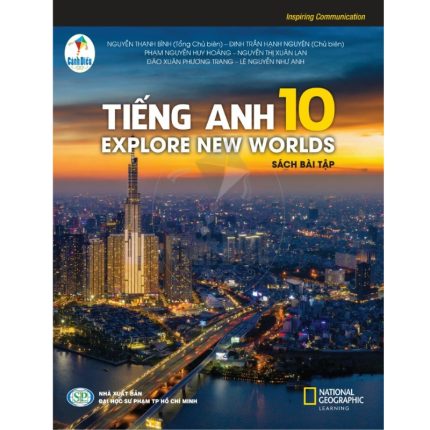
- Bộ sách Cánh Diều
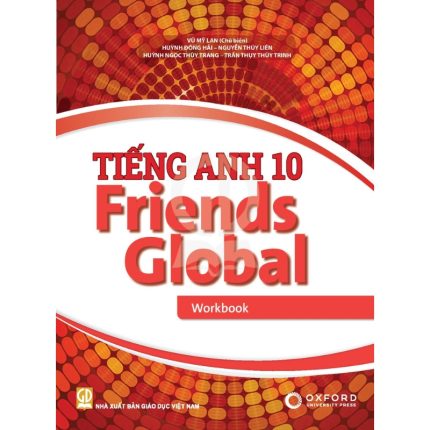
- Bộ sách Chân Trời Sáng Tạo
Bộ sách Chân Trời Sáng Tạo
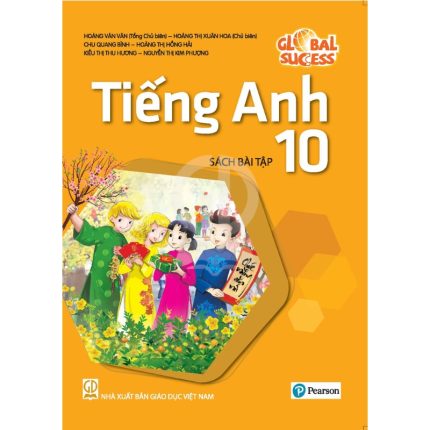
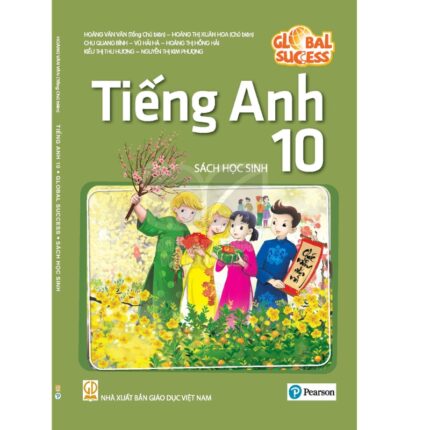
- Bộ sách Kết Nối Tri Thức Với Cuộc Sống
Bộ sách Kết Nối Tri Thức Với Cuộc Sống
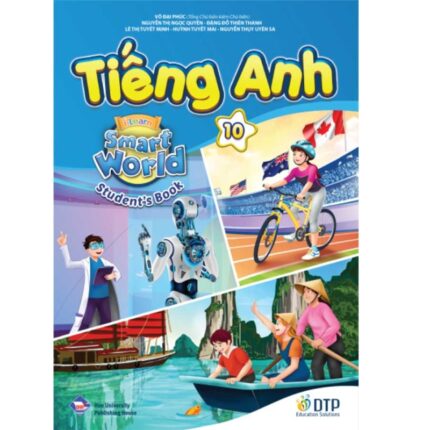
- Bộ sách Tiếng Anh
- Bộ sách Xuất Bản Việt Nam

Mục lục
Unit I: Introduction
A. Vocabulary (p8): Holidays, Holiday activities, Grammar: Past simple, Speaking: Describing holidays.
B. Grammar (p9): Dynamic, stative and linking verbs, Vocabulary: Social activities.
C. Listening (p10): Adjectives, Adjectives describing personality, Vocabulary: Adjectives describing personality, Speaking: Describing personality.
D. Grammar (p11): Articles, plans for the future, Speaking: Talking about plans for the future, Pronunciation: Strong and weak forms of will, am, is, are.
Unit 1: Generations
A. Vocabulary (p12): Ages and stages, Vocabulary: Stages of life, Speaking: Life events, Vocabulary: Talking about your family and background,  Teens talking about their families and backgrounds.
B. Grammar (p13): Past tense contrast, Past simple, past continuous and past perfect.
C. Listening (p14): Family tensions, Strategy: Listening for tone of voice, Vocabulary: Attitudes; family arguments, Speaking: Causes of family arguments, Teens talking about family tensions and arguments.
D. Grammar (p16): used to, Vocabulary: used to / be used to / get used to, Pronunciation: used to.
E. Word Skills (p17): Phrasal verbs (1), Three-part phrasal verbs, Dictionary tip.
F. Reading (p18): Adolescence, Strategy: How to prepare to speak, Vocabulary: Related nouns and adjectives, Key phrases: Presenting your ideas.
G. Speaking (p20): Role-play, Strategy: Preparing to speak, Vocabulary: Exchange programmes, Grammar: should / ought to for advice, Advice for an exchange student.
H. Writing (p21): A message, Strategy: Completing all parts of the task, Key phrases: Polite requests.
Review Unit 1 (p22)
• Reading: Multiple matching
• Listening: True / False
• Speaking: Pair discussion
• Writing: A message
Unit 2: Leisure time
A. Vocabulary (p23): Love it or hate it, Vocabulary: Activities and sports, Speaking: Free time, Speaking: Agreeing or disagreeing with an opinion, Teens talk about things they hate.
B. Grammar (p24): Present perfect and present perfect continuous, Speaking: Talking about experiences.
C. Listening (p25): Eating out, Strategy: Identifying the context of a dialogue, Vocabulary: Food dishes, Key phrases: Phrases to describe experiences, Two teens talk about eating out.
D. Grammar (p26): Present simple and present continuous, Use of English.
E. Word Skills (p28): Compound nouns and adjectives, Vocabulary: Sports venues, Compound nouns, Vocabulary: Compound adjectives, Two teens talk about school facilities, Pronunciation: Stress in compounds.
F. Reading (p30): Field games, Strategy: Multiple choice questions, Vocabulary: Adjectives, Key phrases: Explaining preferences.
G. Speaking (p32): Stimulus-based discussion, Strategy: Using a range of phrases to express opinions, Vocabulary: Adventure activities, Key phrases: Expressing preferences; Raising objections, Key phrases: Confirming an agreement or closing a discussion; A key phrase activity.
H. Writing (p33): A blog post, Strategy: Keeping readers interested, Vocabulary: School clubs.
Review Unit 2
• Reading: Multiple choice
• Listening: Multiple choice
• Speaking: Pair discussion
• Writing: A blog post
Unit 3: Sustainable health
A. Vocabulary (p36): Parts of the body, Vocabulary: Parts of the body, Vocabulary: Treatments, Vocabulary: Accidents and injuries, Speaking: Human body quiz, Speaking: Role play: at the doctor’s, At the doctor’s.
B. Grammar (p38): Speculating and predicting, The first conditional, will enjoy, Speaking: Making predictions about your future.
C. Listening (p39): The body’s limits, Strategy: Listening for numbers, quantities, measurements, Vocabulary: Large numbers, fractions, percentages, dates, etc., The limits of human survival, Pronunciation: Sentence stress.
D. Grammar (p40): Future continuous and future perfect, Vocabulary: Future time expressions.
E. Word Skills (p41): Word families, Related nouns, adjectives and adverbs, Vocabulary: Adjectives to describe feelings, Use of English.
F. Reading (p42): Body clock, Night and day, Strategy: Matching questions with texts and paragraphs.
G. Speaking (p44): Photo description, Strategy: Giving your description a structure, Key phrases: Using your knowledge of the world and the pictures, Speculating about photos, Caring for your appearance.
H. Writing (p45): An opinion essay, Strategy: Structuring your essay and using appropriate language, Key phrases: Introducing opinions, additional points, proposals and conclusions.
Review Unit 3 (p46)
• Reading: Multiple matching
• Listening: Multiple matching
• Speaking: Pair discussion
• Writing: An opinion essay
Unit 4: Home
A. Vocabulary (p47): Describing houses and homes, Vocabulary: Parts of a house and garden, Vocabulary: Describing houses and homes, Key phrases: Describing where you live, An estate agent shows someone round a house, Teens describe their homes.
B. Grammar (p49): Comparatives, Comparative and superlative adjectives and adverbs, double comparative, Use of English.
C. Listening (p50): Young and homeless, Strategy: Recognising paraphrases of simple verbs in a recording, Strategy: Register and context, Speaking: Discussing homelessness, A radio clip about aspects of homelessness.
D. Grammar (p52): Imaginary situations, The second conditional, I wish … / If only…
E. Word Skills (p53): do, make, take, Dictionary work, Use of English.
F. Reading (p54): Alternative living, Alternative homes, Strategy: Finding evidence in the text for your answers, Vocabulary: Homes: compound nouns.
G. Speaking (p56): Photo contrast and discussion, Strategy: Developing your statements, Strategy: Making time to think as you speak, Grammar: Linking words, Vocabulary: In the house, Key phrases: Phrases for gaining time, The pros and cons of different types of accommodation.
H. Writing (p57): An email, Strategy: Appropriate language for informal emails and letters, Key phrases: Starting and finishing a letter or email, Grammar: would rather, had better.
Review Unit 4 (p59)
• Reading: Multiple choice
• Listening: Cloze
• Speaking: Group discussion
• Writing: An email
Unit 5: Technology
A. Vocabulary (p60): Computing, Vocabulary: Digital activities; Computing verbs, Vocabulary: Computing; useful collocations, Speaking: Technology quiz, Speaking: Instructions for digital technology, Calling a helpline.
B. Grammar (p62): Quantifiers, every one of and none of, Use of English.
C. Listening (p63): Navigation nightmare, Strategy: Distinguishing fact from opinion, Vocabulary: Gadgets, Key phrases: Expressing opinions, A dialogue about an amusing satnav mistake, Problems with gadgets.
D. Grammar (p64): must vs have to, modals in the past, Modal verbs, Use of English, Pronunciation: Contraction of have.
E. Word Skills (p65): Adjective + preposition, Use of English.
F. Reading (p66): Clever machines, Strategy: Answering multiple-choice questions, Vocabulary: Verb-noun collocations.
G. Speaking (p68): Photo comparison, Strategy: Using key phrases to compare and contrast photos, Vocabulary: School subjects, Photo descriptions.
H. Writing (p69): An internet forum post, Strategy: Answering all the elements in a writing task, Grammar: Concession clauses.
Review Unit 5 (p71)
• Reading: Multiple choice
• Listening: True / False
• Speaking: Pair discussion
• Writing: An internet forum post
Unit 6: High flyers
A. Vocabulary (p72): Describing character, Vocabulary: Describing character; Collocations, Vocabulary: Describing character; adjective endings, Vocabulary: Personal qualities, People discussing qualities needed for jobs, Pronunciation: Main stress in noun-adjective pairs.
B. Grammar (p74): Cleft sentences, Use of English.
C. Listening (p76): Nellie Bly, Strategy: Listening for linking and signpost words, Use of English, Speaking: Discussing Nellie Bly’s achievements, Nellie Bly’s round-the-world trip.
D. Grammar (p78): Gerunds, perfect gerunds and perfect participles.
E. Word Skills (p77): Phrasal verbs (2), Separable and inseparable phrasal verbs, Dictionary work.
F. Reading (p79): Rachel Carson, An inspiring ecologist, Strategy: Gapped text, Vocabulary: Phrasal verbs with proposition-connections.
G. Speaking (p80): Guided conversation, Strategy: Completing the task / Moving the conversation on, Grammar: Indirect questions, Key phrases: Indirect questions, A job interview with a hotel manager.
H. Writing (p81): A for and against essay, Strategy: Using rhetorical questions.
Review Unit 6 (p83)
• Reading: True / False
• Listening: Multiple choice
• Speaking: Group discussion
• Writing: A for and against essay
Unit 7: Artists
A. Vocabulary (p84): Talking about the arts, Vocabulary: Art forms; Artists, Vocabulary: Artistic activities, Vocabulary: Cultural activities, People talking about cultural events.
B. Grammar (p86): The passive.
C. Listening (p87): Poetry in motion, Strategy: Listening for implications and subtext, Speaking: Discussing poetry, The Lost Generation, People talking about poetry.
D. Grammar (p88): have something done.
E. Word Skills (p89): Indefinite pronouns and requests, Vocabulary: Musical genres.
F. Reading (p90): Graffiti’s serious side, Grany graffiti, Strategy: Answering multiple-choice questions, Key phrases: Arguing your point.
G. Speaking (p92): Photo comparison and role-play, Strategy: Using a variety of expressions, Strategy: Phrases for introducing negative references, Vocabulary: Cultural events and shows, Key phrases: Talking about likes and dislikes, Choosing a show or cultural event, Talking about cultural events, Pronunciation: Word stress.
H. Writing (p93): A school magazine entry, Strategy: Choosing a title for an entry, Strategy: Structuring your entry, Key phrases: Describing stories.
Review Unit 7 (p95)
• Reading: True / False
• Listening: Multiple choice
• Speaking: Pair discussion
• Writing: An entry
Unit 8: Cities
A. Vocabulary (p96): Talking about cities, Vocabulary: People; Places, Means of transport; City problems, Speaking: Discussing the benefits of living in the city, Speaking: Travel discussion, People talking about travel experiences.
B. Grammar (p98): The third conditional, Pronunciation: Contractions.
C. Listening (p99): Travel solutions, Strategy: Identifying names and proper nouns, Strategy: Identifying register, Vocabulary: Travel collocations, Travel problems.
D. Grammar (p100): Participle and infinitive clauses.
E. Word Skills (p101): Verb patterns.
F. Reading (p102): Cities in the future, Go autonomous – Go green, Strategy: Matching more than one answer with a question.
G. Speaking (p104): Guided conversation, Strategy: Using your preparation time, Vocabulary: Holiday activities and accommodation, Planning a holiday, Pronunciation: Falling and rising intonation on reply questions and question tags.
H. Writing (p105): A formal letter, Strategy: Using paragraphs, Vocabulary: Formal words and phrases.
Review Unit 8 (p107)
• Reading: Question and answer
• Listening: Cloze
• Speaking: Group discussion
• Writing: A formal letter
Phụ lục
Culture
Ethnic groups in Viet Nam (p22)
More than a film (p34)
Asian sports (p46)
Royal palaces (p58)
Benjamin Franklin (p70)
British public schools (p82)
To he – Vietnamese craftwork (p94)
The Mekong River (p106)
Vocabulary Builder (p108)
Vocabulary Builder and Reference (p114)


Đánh giá
Clear filtersChưa có đánh giá nào.